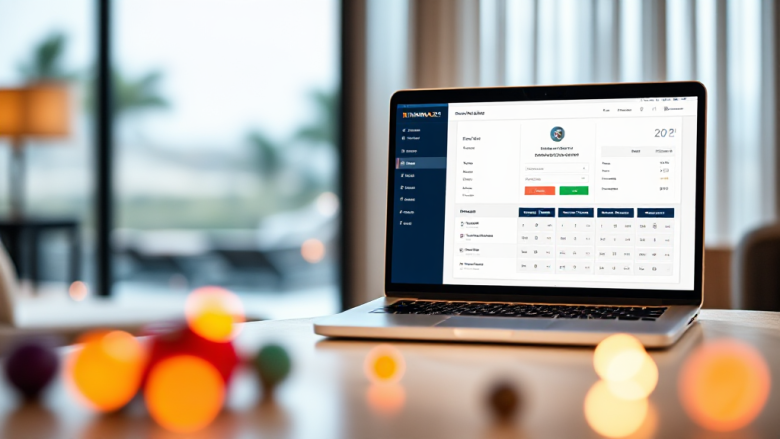
The NIRWANA28 Login as Your Account Control Point: Deposits, Limits and Records
Most people think of a login screen as a simple gate. You type a username, enter a password, and you are in. But for anyone who treats an online gaming account the way a disciplined investor treats a brokerage account, the login is something far more important. It is the control point. It is the single moment where access, budget, and intention all meet in one place. The nirwana28 login is not just a doorway into sportsbook markets, casino tables, toto slots, or togel 4D numbers. It is the moment you take command of the money you have chosen to put at risk, and the moment you decide how that money will behave for the rest of the session.
This article looks at the NIRWANA28 login from an account-management perspective. Instead of treating it as a technical step, we will treat it as a financial checkpoint. We will walk through account access, the movement of money in and out, the role of spending limits, and the habits that keep records clean. If you have ever wondered why some players seem calm while others spiral, the answer usually sits right at the login screen.
Account Access as the First Financial Decision
Every session on NIRWANA28 begins the same way. You authenticate, and the platform recognizes you as a returning account holder with a balance, a history, and a set of preferences. That recognition is powerful because it means the platform already knows your patterns. The question is whether you know them too.
Treating access as a financial decision starts with preparation before you type anything. A finance-minded user checks three things before logging in: the amount currently in the account, the amount they are willing to lose in this session, and the amount they intend to withdraw later. These three numbers do not need to be complicated. They simply need to exist. Without them, the login becomes an open door with no frame around it.
Security also belongs in this first section because account access and money access are the same thing on a gaming platform. A strong, unique password protects the balance as much as it protects the profile. Two-factor authentication, where available, adds a second lock to the same vault. Device hygiene matters too. Logging in from a shared or public device turns a private financial account into a public one, and no spending plan survives that.
There is also a psychological layer to access. The moment you log in, you cross from the ordinary world into a space designed to be engaging. Recognizing that transition is useful. It is the difference between walking into a store with a list and walking into a store with a feeling.
Deposits and the Discipline of Funding an Account
Once you are inside the account, the next financial event is usually a deposit. On NIRWANA28, deposits fund the balance that supports sportsbook wagers, casino play, toto slot spins, and togel 4D entries. From a control-point perspective, a deposit is not a purchase. It is a transfer of budget from your real life into a closed environment, and that transfer deserves the same care as any other.
The first discipline is separation. Money used for gaming should come from a defined source, not from rent, savings, or emergency funds. A separate account or a separate wallet makes this visually obvious. When the gaming balance and the household balance live in the same place, the boundary between them erodes quietly.
The second discipline is sizing. A deposit should reflect the session plan you set before login, not the excitement you feel after login. This is why the control-point framing matters. If you decide the deposit amount before you see the markets, the odds, or the reels, you are deciding with a clear head. If you decide after, you are deciding with the platform’s energy in the room.
The third discipline is frequency. Frequent small deposits can feel harmless, but they add up in ways that are easy to miss. Reviewing deposit frequency is one of the simplest ways to catch drift before it becomes a problem. A weekly review of how many times you funded the account tells you more about your habits than any single session result.
Withdrawals and the Reality Check They Provide
Withdrawals are where a gaming account stops being abstract and becomes real money again. This is why the withdrawal step deserves attention at the same control point as the deposit. A player who never withdraws is not really managing an account. They are recycling a balance.
Planning withdrawals in advance changes behavior. If you know that a portion of any win will leave the platform, you are less likely to treat the whole balance as play money. Some users set a rule: withdraw a fixed percentage of any significant gain, and let the rest continue. Others withdraw on a schedule, regardless of results. Both approaches share one trait. They treat the account as a place money passes through, not a place money disappears into.
It also helps to understand the practical side of withdrawals on NIRWANA28, including processing times and any verification steps tied to the account. Knowing what to expect removes friction, and friction is often what pushes people to reverse a withdrawal decision out of frustration. A smooth, planned withdrawal is a small victory for discipline.
Finally, withdrawals are emotional events. Taking money out after a loss can feel like admitting defeat. Taking money out after a win can feel like interrupting a streak. Both feelings are normal, and both are reasons to have a rule in place before the session starts. Rules made in calm moments protect decisions made in loud ones.
Spending Limits as the Core of Responsible Play
If the login is the control point, spending limits are the controls themselves. Limits convert good intentions into automatic behavior. They are the difference between hoping you will stop and having a mechanism that helps you stop.
There are several kinds of limits worth thinking about. A deposit limit caps how much money can enter the account over a period. A loss limit caps how much can leave your overall budget. A session limit caps time, which indirectly caps spending because time and money move together on a gaming platform. A wager limit caps the size of any single bet, which protects against the one big decision that undoes a month of caution.
On NIRWANA28, account settings are the natural home for these controls. The key is to set them during a calm moment, ideally right after a withdrawal or a review, not in the middle of an active session. Limits set in the heat of play tend to be either too loose to matter or too tight to respect. Limits set in advance tend to be realistic.
It is also worth remembering that a limit is not a punishment. It is a boundary that lets you enjoy the platform without negotiating with yourself every five minutes. Players who use limits often report that the experience becomes more enjoyable, not less, because the background anxiety about overspending fades away.
Record-Keeping and Reviewing Your Account History
Records turn a series of sessions into a picture. Without them, every login is an isolated event. With them, patterns emerge, and patterns are where real account management happens.
A simple record can be a note on your phone or a small spreadsheet. The columns do not need to be elaborate. Date, deposit amount, withdrawal amount, session length, and a one-line note about how the session felt are usually enough. Over a month, this record reveals things memory hides. It shows whether losses cluster on certain days, whether late-night sessions run longer, and whether deposits creep upward without any conscious decision.
NIRWANA28 account history and transaction logs support this habit because they provide the raw data. Reviewing them once a week, at a fixed time, turns record-keeping into a routine rather than a chore. The review is not about judging past sessions. It is about adjusting the plan for the next one.
Records also matter for a practical reason. If a question ever arises about a transaction, a deposit, or a withdrawal, having your own notes alongside the platform’s history makes resolution faster. Good records are quiet insurance.
Building a Repeatable Login Routine
All of the ideas above become easier when they are bundled into a routine. A routine removes the need to rely on willpower, because the decisions are already made.
A workable routine might look like this. Before logging in, check your balance and confirm your session budget. Log in through the official NIRWANA28 site, using your secure credentials. Review your limits and confirm they still match your current situation. Play within the plan you set. Before logging out, note the session in your record and, if a withdrawal is due, initiate it. Once a week, review the record and adjust the plan.
This routine is not exciting, and that is exactly the point. Excitement belongs in the games, not in the account management around them. The login stops being a moment of impulse and becomes a moment of control. Deposits, limits, withdrawals, and records all flow from that single, repeatable checkpoint.
Discipline, in the end, is not about never making mistakes. It is about making the important decisions in advance, at the login screen, when your head is clear. The NIRWANA28 login is where that discipline begins every single time.
Frequently Asked Questions About the NIRWANA28 Login
Why is the login described as a control point rather than just an access step?
Because the login is the moment you decide your session budget, confirm your limits, and set your intention for the money in the account. Access is technical, but control is financial, and the login is where both happen at once.
How do spending limits on NIRWANA28 help with deposits and withdrawals?
Limits cap how much can enter or leave the account over a period, which prevents impulsive deposits and emotional withdrawal reversals. They convert good intentions into automatic rules, so you do not have to rely on willpower during an active session.
What should I track in my own records alongside the platform history?
Track the date, deposit and withdrawal amounts, session length, and a short note about how the session felt. Reviewing these weekly reveals patterns that memory misses and helps you adjust your plan before small habits become large ones.
Is it better to set limits before or after logging in?
Set them before, during a calm moment. Limits chosen in the middle of play tend to be either too loose or too strict. Limits chosen in advance tend to be realistic and easier to respect.