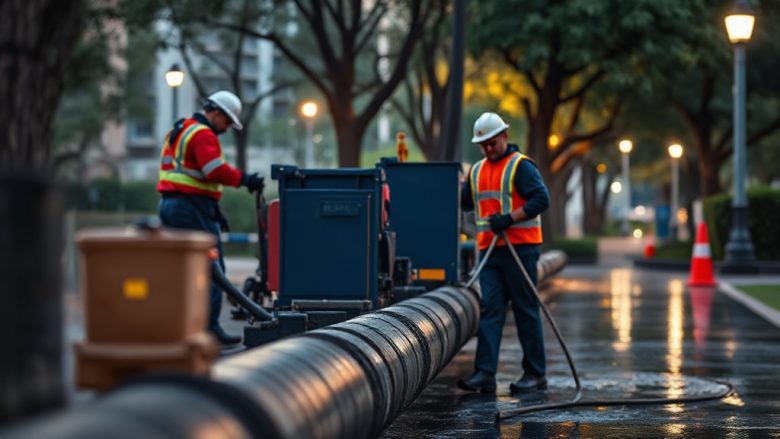
What to Have Ready Before You Call a Desentupidora in Parque São Domingos
Before you dial, get three things straight: where the water is backing up, whether it is one fixture or several, and who has the key to the inspection box or the building’s register. That is the difference between a crew that arrives and solves the problem in one visit and a crew that spends forty minutes guessing. When I dispatch for a desentupidora Parque São Domingos job, the callers who give me those three details get a technician at the door faster and with the right equipment on the truck.
I work the night shift on the west side of São Paulo, mostly in the apartment blocks and the older houses around Parque São Domingos. This is a short account of how a routine call actually runs, from the first ring to the invoice, and what I have learned about keeping a blockage from turning into a flooded garage.
Before the truck rolls: the checklist I run through on every call
The first two minutes of a call decide the rest of the night. I am not looking for a diagnosis from the resident — that is my job — but I need enough to choose between a manual snake, a hydrojetting hose and a vacuum truck. Picking the wrong one wastes a trip and, worse, can push a blockage deeper.
What I ask first
I ask which drains are affected. A single slow shower in a ground-floor house is a local hair-and-soap problem. Two sinks, a toilet and a floor drain all backing up at once means the branch line is blocked and the whole apartment is now sharing one column of wastewater. That second case changes the equipment list immediately.
Then I ask whether the water is coming up clean or dirty. Clean water backing up usually points to a soap or grease clog in a fixture drain. Grey or brown water with solids means the main line or the building’s sewer connection is involved, and that is a different job with a different risk profile.
Finally, I ask about access. In Parque São Domingos many buildings have their inspection boxes set into the sidewalk or behind a locked gate. If the doorman does not have the key, we are standing on the street at midnight waiting for a síndico who lives in another neighborhood. Access is the single most common cause of a delayed emergency call.
The information that saves the most time
- The address with the exact block and any gate code, written down rather than dictated over a bad line.
- The name and phone number of whoever will actually open the door.
- Whether there is a basement, a lowered garage or a slab that water could reach.
- Any prior desentupimento in the last year, and who did it.
- Whether the building has a grease trap or a septic tank on site.
None of this requires technical knowledge. It is just the paperwork of a building, and having it ready is the difference between a fifteen-minute arrival and a forty-minute one.
The call itself: what happens from dispatch to diagnosis
Once the job is logged, the dispatcher matches the address to a crew already in the area. Parque São Domingos sits close to major access roads, so a truck coming from a nearby base can usually be on site quickly — but only if the address is precise. “Near the church” is not an address, and I have lost half an hour to that more than once.
Arrival and the first look
When the technician arrives, the first thing he does is not open a machine. He looks. He checks the inspection box, the cleanout, the floor drains and the water level in each. He lifts the lid on the grease trap if there is one. That five-minute survey tells him whether the blockage is in the building’s internal network or in the public connection outside the property line.
This distinction matters for cost and for responsibility. A blockage inside the property is the owner’s or the condominium’s problem. A blockage in the public collector is the utility’s, and no private company should be charging you to fix it. A good technician will tell you which one you have before he starts billing.
Choosing the method
For a simple fixture clog, a manual cable or a small electric snake is enough. For grease and soap buildup in a kitchen line, hot water and a mechanical snake usually clear it. For roots, hardened grease or a line full of solid waste, the crew moves to hydrojetting — a high-pressure water jet that scours the pipe wall rather than just punching a hole through the blockage.
Hydrojetting is the method I trust most for recurring blockages, because a snake opens a channel and leaves the rest of the pipe coated. The jet cleans the circumference. That is why a line that backs up every three months often stops backing up once it has been properly jetted.
The work on site: what a routine desentupimento looks like in practice
Most residential jobs in this neighborhood follow a predictable sequence, and knowing it helps you judge whether the crew you hired is doing the work properly or just selling you a service.
Step by step
- Protect the area. Mats on the floor, plastic over furniture near the drain, and a bucket under the cleanout before the cap comes off.
- Open the cleanout slowly. A pressurized line will spray. The technician should crack the cap, let it bleed, then remove it.
- Run the equipment from the cleanout, not from the fixture. Working from the fixture risks pushing debris back into the branch line.
- Test with water. Fill the fixture and the floor drain and watch the level. If it holds and drains steadily, the line is open.
- Camera check on recurring problems. If the same line has blocked twice in a year, a small camera inspection finds the root intrusion or the collapsed section before it becomes an excavation.
- Clean up and document. The crew should leave the area as it found it and tell you what was removed and where the weak point is.
That last step is the one most people skip, and it is the one that saves money. A written note of where the blockage was and what caused it is the start of a preventive maintenance plan instead of another emergency call in six months.
What can go wrong
The most common mistake I see is a homeowner pouring chemical drain cleaner into a blocked line and then calling us. The chemical sits against the blockage, heats up and can damage older PVC or cast-iron joints. By the time we arrive, we are dealing with a clog and a weakened pipe. Chemical cleaners are the wrong tool for a main-line blockage.
The second mistake is hiring on price alone. A very cheap quote often means a small snake and no camera, which clears the symptom and leaves the cause. Two weeks later the line backs up again and the second call costs more than the first would have.
Costs, responsibilities and the questions worth asking
Nobody likes talking about price at midnight, but the structure of the bill is simple enough to understand in advance. Most companies charge a call-out fee plus the work itself, and the work depends on the method and the access.
| Job type | Typical method | What drives the cost |
|---|---|---|
| Single fixture clog | Manual or electric snake | Time on site, usually short |
| Kitchen line with grease | Snake plus hot water or small jet | Length of the line, number of cleanouts |
| Main building line | Hydrojetting | Hose length, truck access, volume of debris |
| Septic tank | Vacuum truck | Tank size, distance from the truck to the tank |
| Recurring blockage | Camera inspection plus jetting | Diagnosis time, repair recommendation |
Ask three questions before the work starts: what method will you use, what is the fixed price for that method, and is there an additional charge if the blockage turns out to be in the public line. A crew that answers all three clearly is a crew that has done this before.
For condominiums, the question is who authorizes the work. A síndico can usually approve an emergency repair, but the invoice and the report should go to the administradora. Getting that straight at the start avoids a dispute later. This is why a desentupidora Parque São Domingos São Paulo SP that regularly works with building managers tends to be smoother than one that only handles houses — they already know the paperwork.
Lessons from the night shift: preventing the next call
After enough calls, the pattern becomes obvious. Almost every emergency I attend had a warning sign weeks earlier: a drain that gurgled, a floor drain that smelled, a slow sink that everyone learned to live with. The blockage did not appear overnight. It grew.
What actually prevents blockages
Grease is the main enemy in residential kitchens. Pouring cooking oil down the sink is the single most reliable way to guarantee a call to a desentupidora em Parque São Domingos São Paulo SP within a year. Let it cool, put it in a container, throw it in the trash. It sounds trivial until you see what a year of cooking oil does to a four-inch pipe.
In older houses, tree roots are the second cause. A root finds a hairline crack at a joint, enters, and grows into a mat that catches everything passing through. Camera inspection every couple of years on a property with mature trees is cheaper than excavation.
For buildings, the preventive measure is a scheduled jetting of the main line and a regular grease trap cleaning. A condominium that jets its line once a year spends less than one that calls an emergency crew twice.
What I would tell a neighbor
Keep a note on the fridge with the name of a reliable company, the building’s cleanout location and the síndico’s number. When the water is rising, you will not want to search for any of it. And when you call, lead with the three facts: which drains, what color the water is, and who can open the gate.
The rest is our job. A well-run emergency service will diagnose before it bills, explain the method before it starts, and leave you with a note about what caused the blockage so the next call is a maintenance visit rather than a flood.